handles it alone
The Fine One
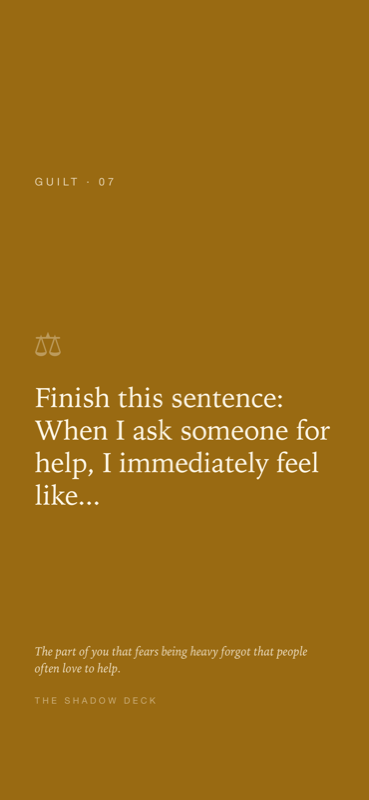
"I'm fine" arrives before you've checked. Help is right there and you still do it yourself. Kindness can feel like a debt.

Overthinking. People-pleasing. Pulling away when it gets close. Saying "I'm fine" on autopilot. Most people can name the loop. Almost nobody can name the mix underneath it — or what to do once they have.
This is one system, not a test with the homework sold later. The quiz scores seven everyday shadows and shows which two are actually running the week. The 8-week kit starts with the loud one. You don't need the theory, a therapist waitlist, or a childhood you don't remember.
Free to take · pay $29 to unlock your result + the full system · instant download
A single label is the boring result. This is built as the whole visit: see which two are loud, then work on the louder one.
Never, sometimes, often, or this is me. Closeness, conflict, rest, the sentence in your head. You don't need to know any of the words.
Seven shadows, each scored from three of its own habits. The result names the loudest two, how they cover for each other, and a short guide for each.
The same payment that unlocks the result gives you the kit matched to it: a scored map, a 21-day no-memory practice, and a daily card so the work happens on a Tuesday, not only when you sit down to "heal."
Each one is a habit with a job. People-pleasing, perfectionism, and "I don't need help" are not the same part. Reaching for someone and stepping back from them are not the same part either. The quiz keeps them separate, then shows which two are covering for each other.
"I'm fine" arrives before you've checked. Help is right there and you still do it yourself. Kindness can feel like a debt.
Yes comes out, then the resentment. Sorry comes out when nothing was your fault. Rest feels like getting away with something.
You can finish the thing and still feel behind. Praise slides off. A small mistake feels like a verdict about you.
A slow reply feels like someone pulling away. You end it first, or you become very useful so they stay. Fast closeness feels more like love than something slow.
You can be warm and still keep the real thing one room away. When it is going well, you wait for the catch. "Am I overreacting?" shows up more than your own read does.
You don't notice you are upset until you have already snapped. The anger is bigger than the moment. The shame after is worse.
Conflict shows up and you look for the door. The talk gets postponed. Under stress you go blank. You are here, and then you are not.
Scoring high on more than one is the ordinary result. The kit starts with the louder of the two. The second waits a week.
Not three products you have to assemble. One sequence: find the wound, practice it in the present, keep a card in the place you already look.
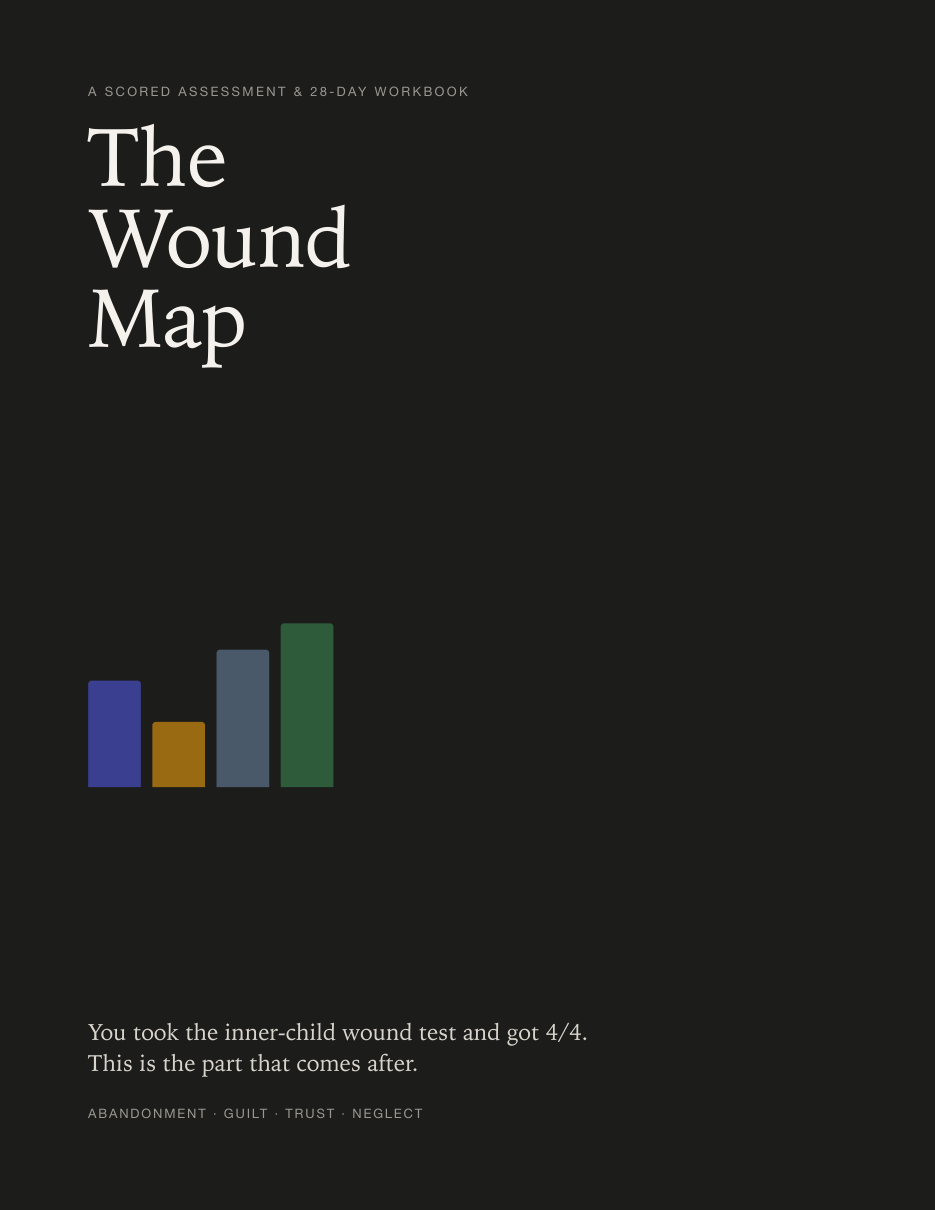
The 40-sentence assessment and a 7-day track matched to your loudest shadow. One page a day. Printable, or write on it in GoodNotes.
You don't need to remember the wound to find it — it's reproducing itself this week. Trigger logs, body map, pattern detective. Notion template + PDF. 10 minutes a day.
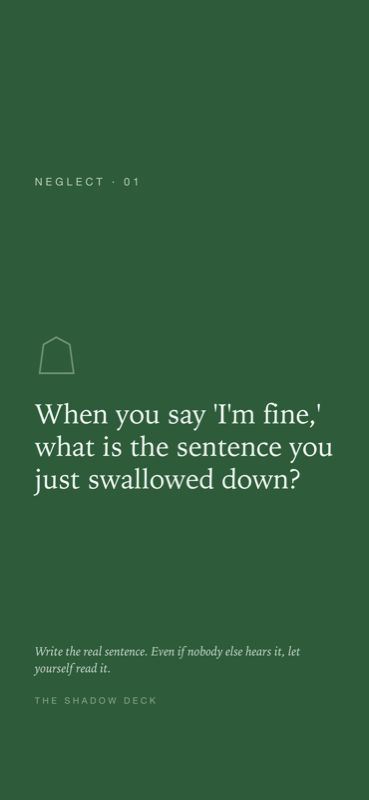
One question a day on your lock screen, plus a print-and-cut deck and a tiny "draw a card" page. Four regulate cards for the days a question lands too hard.
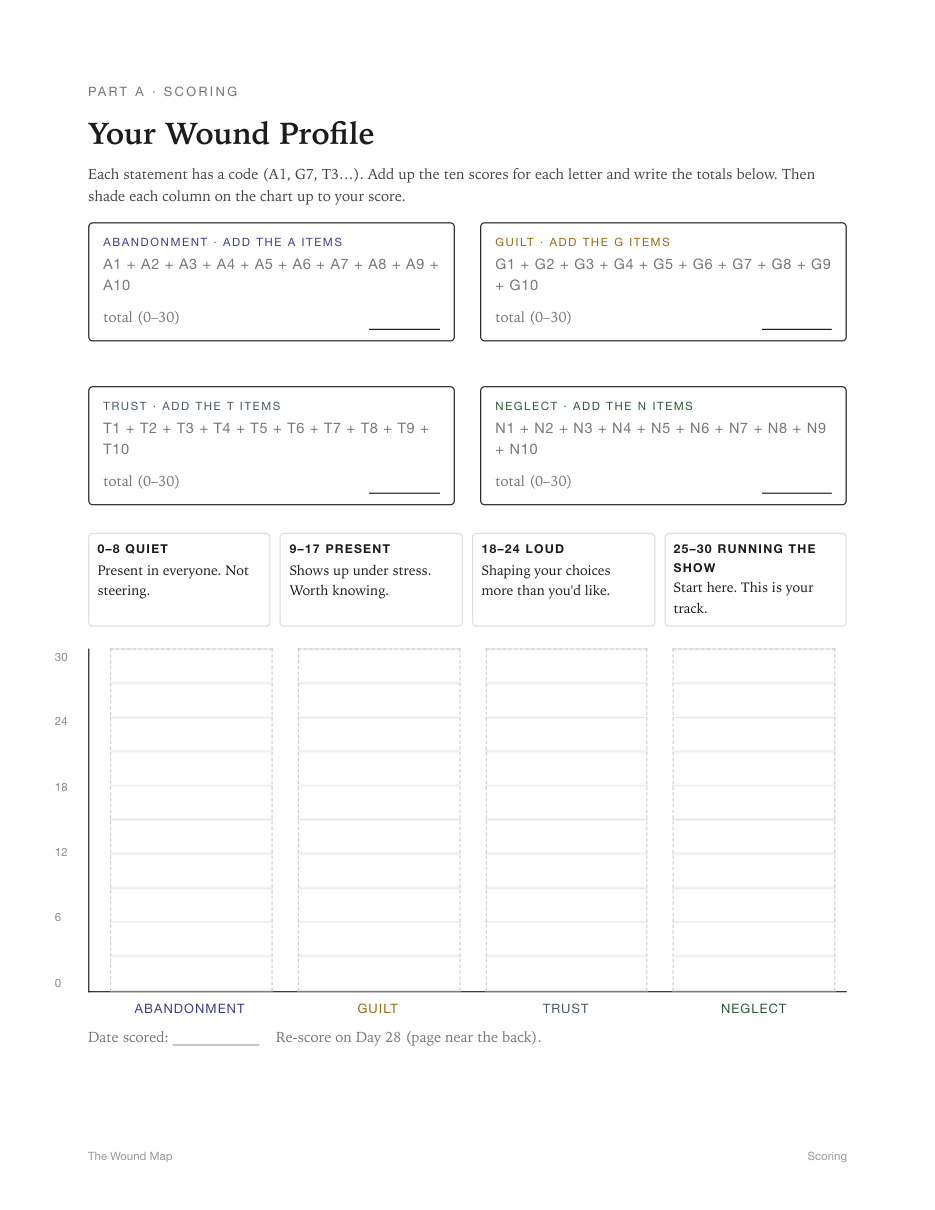
The loudest shadow, the one beside it, and a short guide for each. Then you know which track to open.
Trigger log, body map, the "I'm fine" audit. No memory digging. Just what happened this week.
The Pattern Detective tallies your own notes. You pick 2–3 recurring scripts and run tiny experiments — a boundary, a receiving, a stay-when-you-want-to-leave.
The 7-day wound track, then a second pass if you want it. A card every morning. Re-score at the end so you can see the shape move — not "healed," just quieter.
That's the whole motion. No drip. No subscription. The result is useless without the work, so they come together.
Your full result + the 8-week Shadow Work System
If one day gave you nothing you didn't already have, email me within 14 days and I'll refund it. No form.
This is a self-reflection tool, not therapy. If something comes up that feels too big, stop, breathe, and reach out to a professional or a crisis line (US: call or text 988 · UK & IE: Samaritans 116 123).
It's just looking at the part that runs the night while the capable one runs the day — the reactions, the people you pick, the "I'm fine." You don't study it first. The quiz notices it. The kit is 10 minutes a day of writing, a body reset, and one small experiment. Not a philosophy course.
Because a name without a next page is how people get stuck making jokes in the comments. The result and the 8-week kit are the same product. You take the quiz free. You pay once to see your mix and to get the work that goes with it.
Same. Nothing here asks you to go back. The 21-day program works from the present: what sets you off, where your body tightens, who you keep picking. The pattern shows up on its own. There's a page for if a memory does surface.
That's the result, not a broken quiz. Each shadow is scored on its own. If a second lands close, you get the pair and how they work together. You still start with one, for seven days.
No. I'm not a therapist. If you can access therapy, please do — this sits alongside a waitlist, not instead of care. If you're in crisis tonight, the numbers at the bottom of this page come first.
After checkout: your unlocked result on the thank-you page, two Wound Map PDFs, a Notion import plus a 34-page PDF for the 21 days, and a folder of 52 lock-screens, a print sheet, and one small HTML file for the deck. No app, no login, no subscription.
No. The writing, the questions, and the framework are mine, with a designer's help on layout. It's why there are 52 cards and not 500.
If all you have is "I keep doing the same thing and I am tired of it," that's enough. The quiz finds the pattern. The kit is the eight weeks. That's the product.
Free to take · $29 to unlock the result + the kit · 14-day refund · written by a person
If you already saw the inner-child checklist and want the long story, it's here.